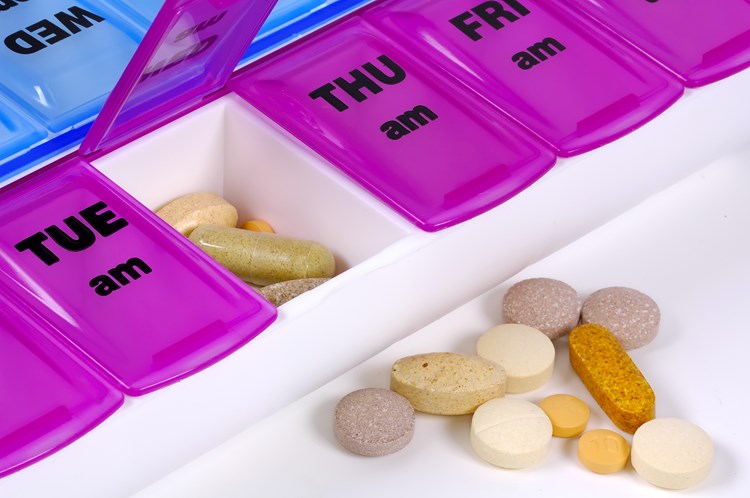

Depending on how medications are taken, they can be crucial for good health or cause a major health setback. When doses are skipped, or too much medication is taken, the results can be deadly.
Medication nonadherence is widespread among seniors. According to the Department of Health and Human Services:
- Fifty-five percent of the elderly are non-compliant with their prescription drug orders, meaning they don’t take their medication according to the doctor’s instructions.
- Approximately 200,000 older adults are hospitalized annually due to adverse drug reactions.
There are many reasons why seniors don’t take their medications as prescribed. Here are six common causes of medication mistakes and tips for how family caregivers can help prevent them.
Vision Problems
For elders who have vision problems, not being able to read the small print on pill bottle labels or distinguish between pills can lead to potentially dangerous medication misuse.
Solutions
Ask your loved one’s pharmacist about accessible prescription medication labels. Many pharmacies offer labels with large print and even labels featuring braille instructions. Another option for seniors with significant vision loss who take several different medications is the use of a talking medication system. These systems include special microchipped labels and a “reader” that can scan individual pill bottles and recite crucial information, such as the drug name, dosage, instructions, prescription number, refill date, pharmacy information, warnings and patient education leaflets, out loud to the patient. These more sophisticated prescription labels are commonly available through larger mail-order pharmacies.
Memory Loss
Elders who suffer from Alzheimer’s disease and other related forms of dementia are prone to many medication management problems. A dementia patient may simply forget to take their meds, causing them to skip doses. They may also have trouble remembering if they’ve already taken a medication and wind up taking multiple doses, risking an overdose.
Solutions
Depending on the progression of a loved one’s dementia, a pill box may be sufficient in the early stages to help them organize and track their medications. There are many types of products available, including computerized pill boxes that call a designated number if pills have not been taken on time, alarmed pill boxes and automatic dispensers.
Seniors with more advanced dementia often lose the ability to safely manage their own medications. For this reason, someone must be present to provide medication reminders and ensure the elder takes their meds as instructed. Professional in-home caregivers can provide this and many other services that help extend dementia patients’ independence.
Read: In-Home Services That Can Help Seniors Continue to Live Independently
Limited Income
Seniors often live on fixed incomes after retiring. Unfortunately, this means that many cannot afford all the medications they need. Low-income seniors may resort to splitting pills, taking less than the prescribed dose or going without their medication for long stretches of time.
Solutions
Fortunately, there are strategies for affording medications on a budget. One important tip is to use generic prescription drugs whenever possible. Generics feature the same active ingredients as their brand-name counterparts but are usually much less expensive. Ask your loved one’s doctor or pharmacist if a generic alternative is available.
Research financial assistance programs for prescription medications. Your loved one’s pharmacy may offer a discount program, or the pharmacist may be aware of manufacturer discount programs and state prescription assistance programs that can help significantly reduce drug costs.
Unfortunately, Original Medicare (Parts A and B) alone only covers a limited number of outpatient prescription drugs under limited conditions. An additional Medicare Prescription Drug Plan (Part D) can help minimize drug costs, but beneficiaries must pay monthly premiums for this optional coverage. However, seniors with limited income and resources may qualify for Extra Help from Medicare to help pay their Part D premiums, deductibles and coinsurance.
Read: Struggling to Pay for Medications? Consider the Medicare Extra Help Program
Swallowing Problems
Some seniors have trouble swallowing medication tablets or capsules due to health issues. This condition is called dysphagia. Seniors who have difficulty swallowing may try to chew, crush, break or mix their tablets or capsules in food or drink. This can be dangerous because some medications are long-acting formulas that will be released too fast when broken or crushed. Other medicines either will not work properly or could make the person sick.
Solutions
An important rule of thumb is to never chew, crush, break or mix medications in fluid unless your loved one’s doctor or pharmacist says it is acceptable to do so. If a senior has trouble swallowing medicines, ask the doctor or pharmacist if their drugs come in smaller pills that are easier to swallow or if a liquid solution is available.
Hearing Loss
A senior who is deaf or hard of hearing may have difficulty hearing and understanding instructions that the doctor or pharmacist provides about how to take their medications.
Solutions
Talk to your aging loved one about not being embarrassed about their hearing loss. If they can’t hear what the doctor or pharmacist is saying, encourage the senior to ask them to repeat themselves. Ensure that they use proper hearing devices like hearing aids to their doctor’s appointments and when picking up medications at the pharmacy. If they still have difficulty understanding verbal instructions or refuse to wear their hearing aids, then it may be wise to have a family caregiver or professional caregiver accompany them to appointments to receive care plan updates and clear instructions.
Social Isolation
Many elderly people live on their own in the community. Several studies have shown that people who live alone more frequently fail to comply with their medication regimens.
Solutions
Talk to your loved one about hiring a companion or professional caregiver. In-home caregivers can help seniors stick to their proper medication regimens and they can also provide valuable socialization that many older adults lack. Without regular engagement with other people, it can be easy for seniors to feel lonely, become depressed and even fall out of old routines, like medication schedules.