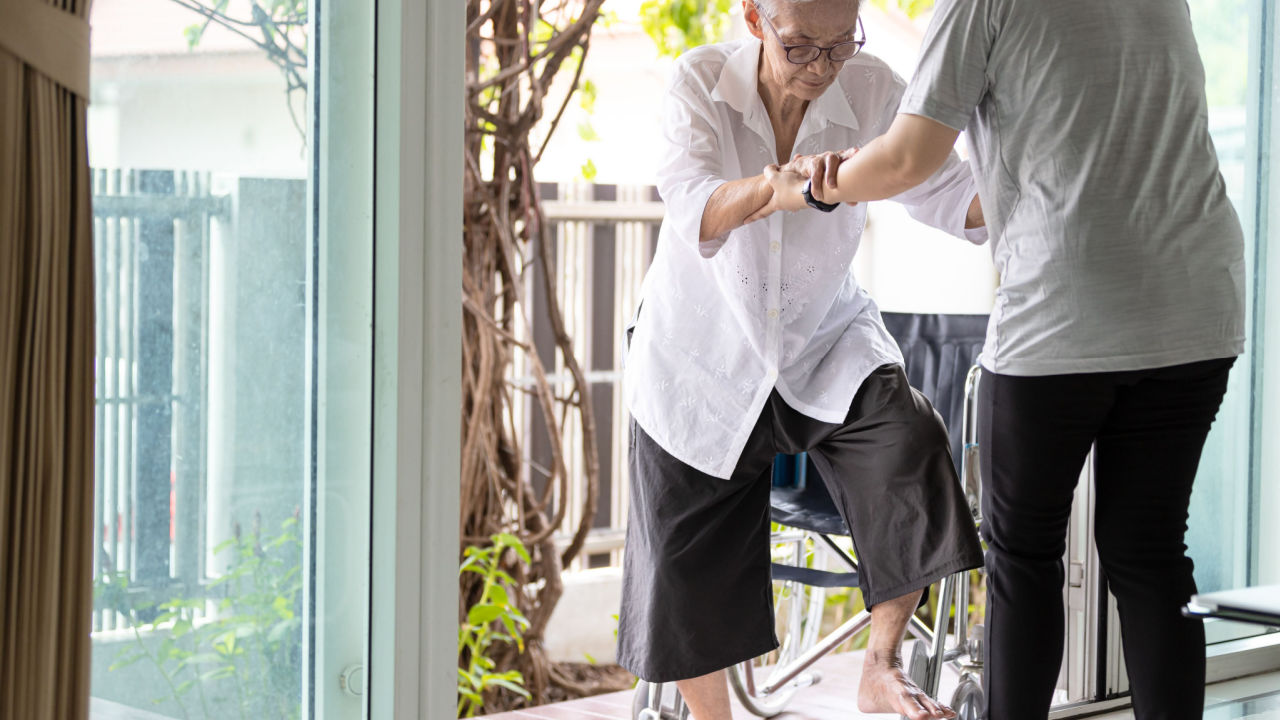

Falls are the leading cause of fatal and nonfatal injuries among older adults, according to the Centers for Disease Control and Prevention (CDC). From broken bones to traumatic brain injuries, falls cause a range of problems for seniors that can affect their overall quality of life. Even if an aging loved one falls but doesn’t sustain any serious injuries, these accidents take a toll on their self-confidence and everyday routines.
Fear of falling often deters older adults from performing activities of daily living (ADLs) and engaging in pastimes they once enjoyed — resulting in declining physical, cognitive, and functional abilities. Fortunately, falls and fractures are not an inevitable part of growing older, and many can be prevented.
How to prevent senior falls at home
More than 75% of falls happen in the home, according to the National Council on Aging. Falls can occur for many different reasons, but there are simple preventative measures that can significantly reduce a senior’s risk of falling and incurring a serious injury.
“Fall prevention strategies are not just about installing grab bars in the shower,” says Amanda Lundberg, BSN, RN. Lundberg has more than 10 years of experience in clinical nursing and focuses on preventative care. “There are many elements to cover to avoid detrimental falls, and implementing fall prevention tactics at home can safely allow seniors to age in place longer.”
The following lifestyle changes, home modifications, and home care fall prevention programs can help an aging loved one remain as safe and independent as possible for as long as possible.
Start with an in-home fall risk assessment
Family caregivers can do their own fall risk assessments in a loved one’s home. Identify and remove obvious trip hazards around the house, ensure there’s adequate lighting in each room, and make frequently used items easier for your loved one to access. Minor changes like these can significantly reduce an elder’s fall risk.
Professional home care agencies can help with in-home fall risk assessments as well. This service is especially helpful for caregivers who live far away from their parents or those who don’t feel comfortable conducting an assessment on their own.
A home health care agency can send an occupational therapist or a physical therapist to observe your loved one performing regular tasks and moving about the home. The assessment is person-centered and allows the professional to understand a senior’s daily activities, health status, and home environment.
A home care fall prevention assessment is designed to accomplish the following:
- Check for slip or fall risks around the home
- See how well a senior is able to navigate their space and what activities or tasks they carry out on any given day
- Provide an overview of risks and recommendations to adjust the home environment or make changes to daily routines
- Share best practices for aging in place and examples of exercises that can improve balance and strength
- Work with families to adjust to new home modifications and understand their benefits
Make home modifications to improve safety
The following home modifications are commonly recommended during a home care fall prevention assessment:
- Keep all rooms free of clutter, especially the floors. Furniture should be easy to walk around and walkways should be kept clear. That means no electrical cords or other trip hazards. As part of a home care fall prevention program, homemaking services may be recommended to keep your loved one’s home clean and organized.
- Ensure that all stairwells are adequately lit and have sturdy handrails on both sides. Consider placing contrasting fluorescent tape on the edge of each step to avoid missteps.
- Install grab bars on bathroom walls beside tubs, showers, and toilets. For seniors who tire easily or are unstable on their feet, consider using a transfer bench or shower chair for increased stability when bathing. Use a nonslip spray treatment or permanent nonslip strips to provide added traction on the floors of showers and bathtubs.
- Ensure that light switches are located near the entry points of each room to prevent fumbling in the dark. Another option is to install voice- or sound-activated lamps. Motion-activated night lights are an inexpensive way of increasing visibility throughout the home at night.
- Reorganize closets, cabinets, and other storage areas to minimize the need to bend down or reach up when retrieving commonly used items. These actions may cause elders to lose their balance and fall.
- Keep floors clean and dry but not slippery. Check that all carpets and area rugs have skid-proof backings or are firmly secured to the floor, including carpeting on stairs.
“Many seniors may be afraid of making changes to their homes, and some tend to care more about the aesthetics of a home than the risk of unforeseen falls,” Lundberg says. “Start by making very small changes.”
Fortunately, many home safety products have been redesigned to look less institutional and blend in with a senior’s decor. Grab bars and transfer poles now come in decorative designs with aesthetically pleasing touches like graphite and nickel finishes, for example. Lundberg helped her aging grandparents implement unique home modifications that met both form and function.
“Throw rugs are typically a no-no, but using carpet tape to hold them down allowed my grandparents to keep their rugs since they looked so good!” she says. “We creatively eliminated the hazard. I think it's important for caregivers to point out that ‘fall prevention’ doesn't mean a senior’s home will now look like a nursing home facility.”
Help your loved one choose appropriate footwear
Supportive, low-heeled shoes with backs and nonslip soles are ideal. It’s best to avoid walking around in socks, stockings, or backless slippers. Your parent may have a favorite pair of shoes that are worn out, ill-fitting, or impractical. If so, it may be time to go shopping. Older shoes are likely to have lost their traction and can be a serious fall hazard.
Encourage regular physical activity
It’s the first line of defense against falls and fractures. As people get older, they typically become less active and begin to lose muscle mass and tone. This leads to decreased strength, coordination, and flexibility, and increases the risk of falls. Work with a doctor or physical therapist to create an exercise program that's right for your aging loved one. Even a mild exercise regimen can help seniors improve their stamina, balance, and mobility, regardless of their age. A home care companion can accompany your loved one on walks and encourage physical activities that are appropriate for their level of mobility.
Evidence-based fall prevention programs are also available at locations nationwide to help seniors stay physically active and safe in their homes and communities. Ask your loved one’s physician about local fall prevention clinics or visit the National Council on Aging website to find one near you.
Ensure proper, consistent use of mobility aids
It’s important to use mobility aids correctly. Elders are often reluctant to get — or consistently use — mobility aids like a walker, cane, or rollator. Emphasize that these devices are meant to facilitate safe, active, and independent living. A physical therapist or occupational therapist can conduct an assessment, recommend the appropriate durable medical equipment, and educate the patient on how to use it. Hired home care aides can also monitor your loved one to make sure they’re using the proper mobility aid on a regular basis. Medicare Part B covers medically necessary durable medical equipment, but only if it’s prescribed by a doctor.
Stay current on eye exams
Even the smallest changes in sight can make one more prone to falling. Encourage aging loved ones to wear their eyeglasses (and use low vision aids if necessary) so they can see their surroundings clearly. Receiving regular eye exams helps ensure a senior has the correct prescription.
If your elder gets a new eyeglass prescription, advise them to be extra cautious while they’re still getting accustomed to it. For example, bifocal, trifocal, and progressive lenses can distort vision and depth perception while walking. This may lead to loss of balance and falls. Have your loved one practice looking straight ahead while walking and lowering their entire head when looking at the ground instead of gazing through the lower parts of the lenses to prevent falls.
Check for medication side effects and interactions
Schedule a complete medication review with a loved one’s doctor or pharmacist every time their regimen changes or at least once a year. This may ensure your parent is taking their medications correctly and that none of them are causing adverse reactions.
As people get older, they’re more likely to suffer from a variety of chronic medical conditions that must be managed with medication. According to a CDC report, 83% of U.S. adults in their 60s or 70s used at least one prescription medication in the 30 days before the survey was conducted. The same report shows approximately one-third of seniors used five or more prescription drugs. Routine use of multiple medications, or polypharmacy, increases the risk of side effects and the potential for adverse drug interactions.
Seniors with illnesses that affect their circulation, sensation, mobility, or mental alertness are more likely to fall. Certain prescriptions can cause dizziness, confusion, drowsiness, fluctuations in blood pressure, or slowed reflexes. All of these symptoms can lead to an unexpected fall.
Over-the-counter medications, herbal supplements, and vitamins can cause problems as well, so be sure to include these in the review. The doctor or pharmacist may be able to simplify a senior’s regimen, suggest alternative medications, or recommend timing medications differently to minimize side effects.
Consider a home care fall prevention program
A 2021 study showed that home care fall prevention programs can reduce falls by nearly 40%. While families can proactively prevent falls through home modifications, using a home caregiver to round out your fall prevention strategy can be a lifesaver — literally.
In-home caregivers can support fall prevention on an ongoing basis and help with many of the objectives above. Professionals can see your parent’s home in a different light, allowing them to detect hazards you may not have noticed. An in-home caregiver will consistently monitor for fall risks during their shifts and can help in a variety of ways. They can handle more physically demanding household tasks like doing laundry or preparing meals, assist with activities of daily living, watch for reactions to medications, and even drive a senior to their medical appointments. Being proactive in preventing falls can allow your loved one to embrace their independence and feel more confident. And you can feel comfortable knowing their home is a safe space that’s been assessed by a professional.
Bringing on a home caregiver or scheduling a home fall risk assessment may give you and your loved one more peace of mind. If you’re ready to find out more about in-home care or hire a caregiver, AgingCare can help.
Reviewed by dementia care expert Adria Thompson, M.A., CCC-SLP.
Sources:
Fall Prevention for Older Adults (https://www.ncoa.org/article/18-steps-to-fall-proofing-your-home)
Data Note: Prescription Drugs and Older Adults (https://www.kff.org/health-reform/issue-brief/data-note-prescription-drugs-and-older-adults/)
Fall-Prevention Program Can Help Reduce Harmful In-Home Falls by Nearly 40% (https://medicine.wustl.edu/news/fall-prevention-program-can-help-reduce-dangerous-in-home-tumbles-by-nearly-40/)