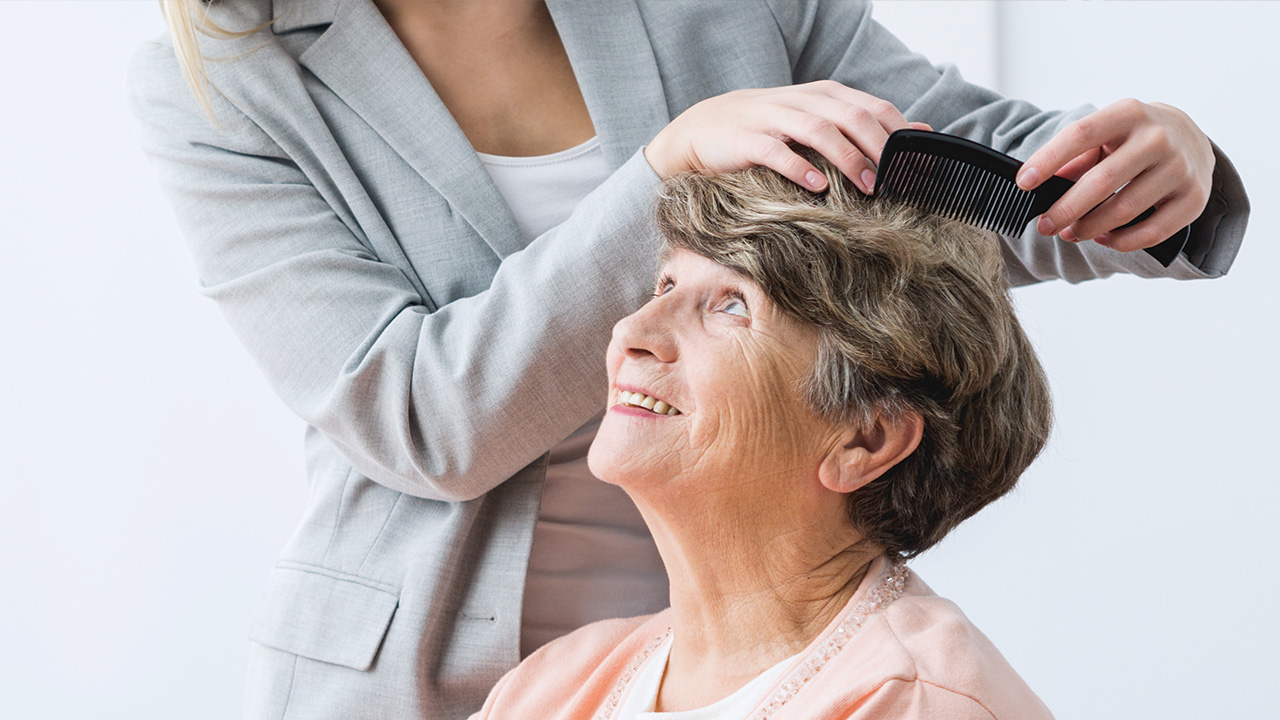
As we age, some of the angst of youth fades, making us more relaxed about our looks. But, our hair is a big part of how we present ourselves to the world, and most of us still want to look our best.
Caring for an elder's hair can be a challenge. My mother-in-law, Alice, had been going to the same beauty shop for decades. The salon was situated in a woman's home, and there were several steps that led up to the entrance. In general, the steps weren't a problem for Alice, until a fear of falling took over. She would freeze about halfway up or down the steps. We'd remain stuck in the middle, and it took a lot of prodding to get her to finish the climb up or the descent down. The whole procedure became so stressful that we made a mutual decision for me to care for her hair in her own home.
I'll tell you up front that I'm not good with hair. For the most part, I'm a minimalist. Alice had perms, but her hair still needed washing and a daily curling to arrange it nicely. Over time, and with lots of humor thrown in, I did learn a few things over the years.
A Caregiver’s Tips for Caring for a Loved One’s Hair
- Stay Upbeat No Matter What
I said it above, but it bears repeating. Don't take it all too seriously. I once got the heated curling brush tangled in Alice's hair and was terrified I'd have to cut a chunk of hair from the back of her head. I kept my cool, joking that she would have to withhold a tip, since I was taking so long. I'm not sure she got the joke, but she laughed. With plenty of patience and the help of some spray detangler, I was able to free the curling brush from her hair. I might add that I bought a smooth-barreled curling iron for our next session! - Keep It Simple and Realistic
My mom once had lush, natural curls. As she aged and her overall health declined, her hair got quite thin. Most women have some hair thinning after menopause, but Mom's was more pronounced due to her medical issues. She also lost her curls. We had to find a haircut that worked for her new hair texture and changing abilities. Mom’s cut turned out to be quite short and a bit severe, but it was more manageable in the long run. It can be difficult to get a senior to warm up to the idea of a new style or cut, especially if they have been wearing their hair the same way for years, so try to be patient and work with them to find something they like. - Detach from Others’ Expectations
I know some of my mom's friends thought I could have tried harder to make her look nice, but she was the boss. I'd have liked to work with it a bit to coax some curl into her look, but she refused to let me try and I couldn't make her do it. Her hair was kept clean and cut as well as possible, when she'd allow it. I did my very best, and that’s what good caregiving is all about. Thankfully, she loved her regular shower and hair washing until the end. - Water and Room Temperature Are Important
If you are working with someone who has dementia, you may find that they go from loving their hair washing time to fighting you when you try. If you have an occasional day like that, let it go. No one I know has ever died from skipping a hair wash. If this refusal is chronic, it is likely due to fear or something about the process that is making them uncomfortable. Individuals with dementia can have difficulty articulating what is bothering them. Make a point of checking the room temperature and water temperature carefully so that it's not shockingly cold or hot. This sounds like a no-brainer, but your elder may be more sensitive to temperatures than you are. Test with your inner arm, your foot or a part of your body other than your hands, which have likely become used to hot water. - Use the Right Products
When selecting hair care products, opt for simplicity and safety. Baby shampoo is an excellent choice, since it won't burn if it happens to get in the senior’s eyes. A leave-in conditioner or detangling spray may also be easier to apply than traditional conditioner, and it eliminates the need for a second rinse in the shower or sink. If styling is still a priority, try to select gentler products that wash out easily and don’t cause build-up. - Set a Calm Mood
If your loved one shows fear or confusion when you try to wash or fix her hair, only attempt it when both of you are feeling as calm as you can be. It can help to look at some fun old photos or listen to old tunes on CDs beforehand. Playing music your loved one likes during the process can also help to extend this calming effect. Our loved ones pick up on anxiety and frustration, so do your best to act like it is no “big deal” whether you get this done or not. - Get Help
If you find yourself getting stressed over your loved one’s hair care, you may want to find a local hair stylist who makes house calls. You can also hire a professional caregiver through an in-home care agency to help with bathing, hair care and other grooming activities. - Be Satisfied With Partial Results
A full wash, dry and style each day is not a realistic goal for caregivers or their loved ones. Sometimes we have to let it go, and sometimes there are acceptable ways of cutting corners. Dry shampoos that come in a powder or foam can be easily applied, massaged into hair and brushed through. Hair deodorizers are available that can keep tresses smelling fresh. No-rinse products are especially useful for seniors who can’t or won’t use products that require rinsing with water. These come in traditional bottles and in caps that can be warmed up for a relaxing shampoo and scalp massage. - Go Easy on Yourself
Each attempt at helping a loved one may be different from day to day, so compromise or give in entirely sometimes. Do so gracefully. Know that perfection is not possible or even desirable. If you are worried about health issues due to lapses in personal hygiene, ask your doctor if he or she has more ideas. Chances are good that the doctor will say you are doing just fine. - Bask in Your Results
After you've done what you can, indulge in some kind of treat. If she is able, tell her you want to take her out and show off her hairdo. Do whatever you can to let her know that staying as well-groomed as possible is fun. When you succeed even in a small way, make a big deal of the results. If she hasn't gotten afraid of “the stranger in the mirror,” which is common with Alzheimer's, show her how nice she looks. If mirrors are off limits, then just appeal to her sense of vanity and tell her she looks beautiful.