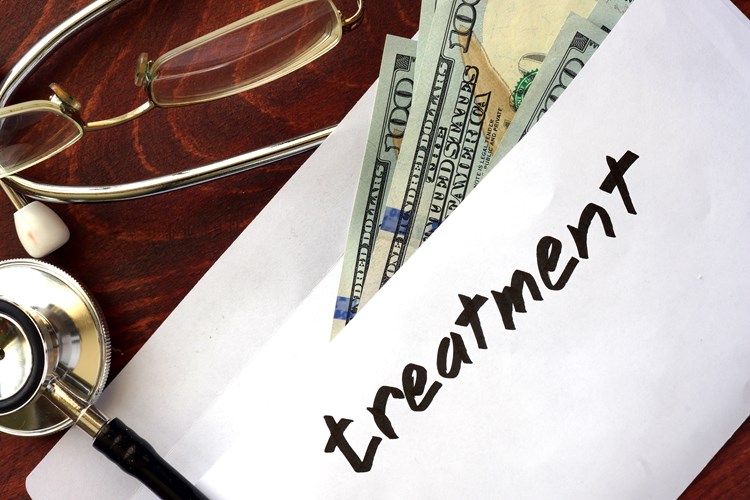

Rising health care costs leave a growing number of cancer patients - both uninsured or with insurance - without the financial coverage they need, says Dr. Richy Agajanian, M.D. of the Oncology Institute of Hope and Innovation.
"Over 11 million people in the U.S. have been diagnosed with cancer and it is one of the five most costly medical conditions. This forces many patients to make decisions about their health care and cancer treatment based on finances not on what is best for their health," says Dr. Richy Agajanian, M.D. of the Oncology Institute of Hope and Innovation.
"Once diagnosed with cancer, whether insured or not, people face significant and sometimes devastating hurdles to receiving timely, affordable treatment in our health care system," he says. "Cancer patients require a lot of services - infusion therapy, medication, surgery, ongoing care from doctors and nurse practitioners. Many don't have insurance, or they aren't reimbursed by their insurance company, so they are forced to do without treatment."
"We spend a lot of time with our patients talking about options based on what they can and can't afford. As doctors, we are constantly juggling what's best for patients versus what they can afford. Whether or not health care reform will help fix this problem remains to be seen."
One in eight people with advanced cancer turned down recommended care because of the cost, according to a new analysis from Kaiser Foundation. And one in four cancer patients or their families said they used up all or most of their savings to pay for treatment.
Financial obstacles cancer patients face include:
Drug costs
Many of the medical advances that allow cancer patients to live longer come at a high cost. New, more effective drugs are being developed all the time, drugs that are extremely effective in cancer treatment. However, some of the newer drugs cost upwards of $10,000 a month, prices most uninsured people can't afford. Even patients who do have insurance often have to pay 20 to 40% of that cost.
Cost of treatment
Just like with drug costs, the cost of cancer is astronomical. Treatment costs, deductibles and co-pays put cancer care out of reach for many. "Every year co-pays increase," says Agajanian. Additionally, he says, managed care is cutting treatments by 20% to 30% with higher co-payments.
Pre-existing conditions
Health insurance companies often charge higher premiums or deny coverage for those who have chronic pre-existing conditions like cancer. Health insurance reform will prevent any insurance company from denying coverage based on an underlying health status, including cancer, according to healthreform.gov, the government's official website for information on health care reform.
Doctor Agajanian is skeptical, but hopeful. "I don't know what will happen. My hope is that patients will be insured or reimbursed more. There are millions of patients who need but don't have insurance, with chronic conditions like cancer who desperately need it. Patients without insurance end up in the emergency room, and often die of cancer."
Denying payments
Even those who do have insurance sometimes can't get treatment, because their insurance company denies payments. In an attempt to help these patients, Agajanian has six people on his staff who fight insurance companies who have denied treatment, and try to get coverage or reimbursement for cancer patients. "An 80-year-old woman will not fight the insurance company alone," Agajanian says. "We do it on behalf of our patients, although it's time-consuming and expensive.
Further complicating the issue is Medicare, which authorizes some treatments, but not others. And if a doctor gives a treatment that Medicare deems "inappropriate," the doctor will be audited.
Wellness and prevention
If people, including elders, received their recommended cancer screenings, not only would the projected cost of treatment be reduced by catching the cancer early, but thousands of lives would be saved. According to healthcare.gov, health insurance reform will ensure that all Americans have access to free preventive services through their health plans.
The future of cancer treatment for the elderly
What does the future hold, in particular with health care reform on the horizon? "I think there will be difficult times ahead," Agajanian says. "If costs don't come down, many patients won't be able to get the treatment they need, and doctors might have to cut down the number of clinics to provide quality care and cover costs.
The increasing cost of health care raises complex questions related to cancer treatment and the impact the lack of affordable treatment will have on society.
The Oncology Institute of Hope and Innovation has five locations in the Los Angeles area, all specializing in the diagnosis and treatment of types of cancer, as well as prevention and education. For more information, visit www.theoncologyinstitute.com .