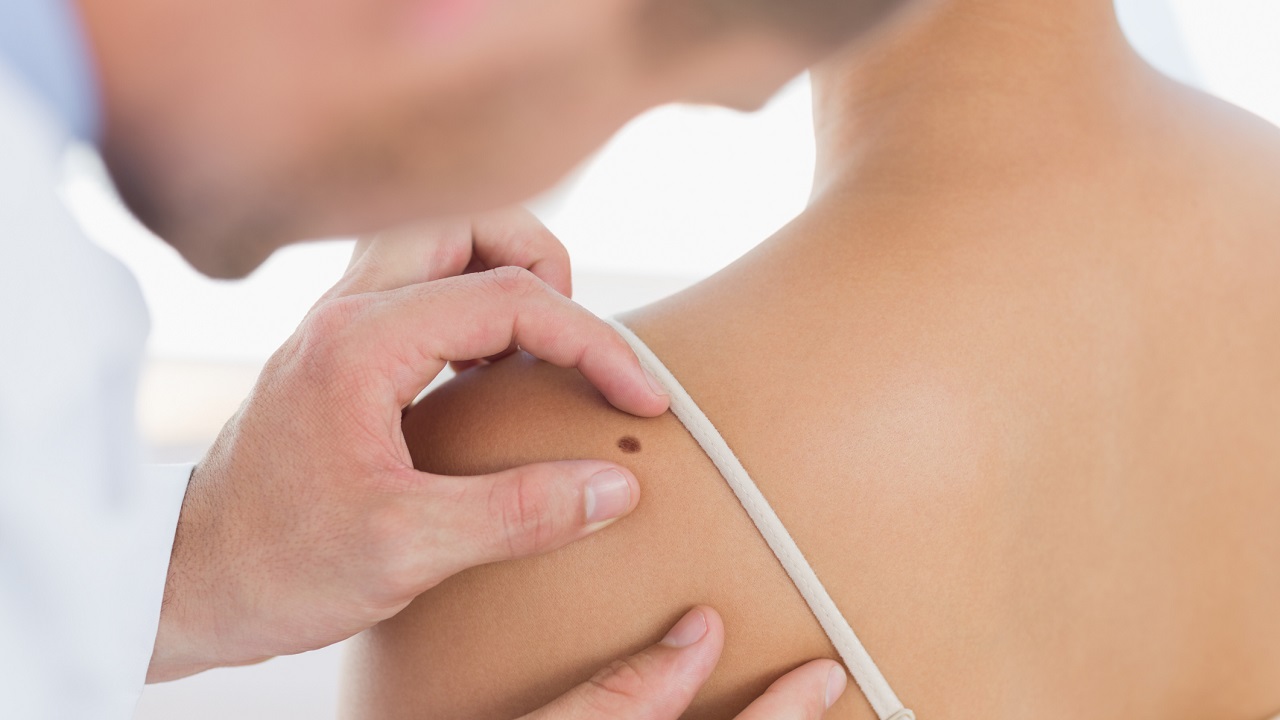

Skin cancer—the abnormal growth of cells that make up the outer layer of the skin (epidermis)—is one of the most common types of cancer among seniors. Symptoms are often subtle, so it’s important to understand what to look for and how treatment decisions can be more complicated for older adults.
There are three major types of skin cancer:
- Melanoma
- Basal cell carcinoma (BCC)
- Squamous cell carcinoma (SCC)
All three are common among seniors, but melanoma is the most aggressive and most deadly type.
What is Melanoma?
Cutaneous melanoma occurs when skin cells called melanocytes become cancerous. The skin has 2 main layers: the epidermis (upper or outer layer) and the dermis (lower or inner layer). Melanocytes are found throughout the lower part of the epidermis. They make melanin, the pigment that gives skin its color. When exposed to the sun, melanocytes make more pigment, which is what causes skin to tan or darken.
Melanoma can occur anywhere on the body. Malignant tumors typically develop in areas that are exposed to the sun, but skin cancer cells can also occur in areas that do not usually get sun exposure. In men, melanoma is often found on the trunk (the area from the shoulders to the hips), head and neck. In women, melanoma often develops on the arms and legs.
Melanoma Risk Factors
- Unusual moles
- Exposure to natural sunlight
- Exposure to artificial ultraviolet light (tanning booths)
- Family or personal history of melanoma
- Being white and older than 20 years
- Red or blond hair
- White or light-colored skin and freckles
- Blue or green eyes
Skin Cancer Symptoms to Look for
To be on the lookout for skin cancer, it’s best to conduct a self-exam at least twice a year. In fact, the Skin Cancer Foundation recommends head-to-toe at-home skin checks once a month to ensure early detection.
The easiest way to remember the symptoms of skin cancer is by using the following A-B-C-D-Es mnemonic device.
- Asymmetry: If a mole is divided in half, the two halves are different in size or shape.
- Border: Look for moles with irregular edges or borders.
- Color: More than one color in a mole may be cause for concern.
- Diameter: Moles that are larger than the size of a pea should be examined by a physician.
- Evolving: Changes in the appearance of an existing mole and the development of new moles around existing ones (known as satellite moles) should be discussed with a doctor. This also includes any moles, sores or areas of skin that itch, ooze, bleed or do not heal within three weeks.
Family caregivers can help their loved ones conduct these skin checks and note any areas of concern to track closely and discuss with a primary care doctor or dermatologist. Seniors who are at high risk for developing skin cancer are encouraged to see a dermatologist at least annually for a full-body skin check.
Tests and Procedures Used in Diagnosing and Staging Skin Cancer
If an abnormal spot is found during a skin check, the dermatologist will decide if it needs to be biopsied. When this is the case, part or all of the area will be surgically removed. They will then send this tissue to a pathologist who will examine it under a microscope to check for cancer cells. Since melanoma can be hard to diagnose, patients should consider having their biopsy sample checked again by a second pathologist.
If skin cancer is present, the doctor will perform a wide local excision to remove any remaining abnormal tissue and some of the normal tissue surrounding the area to check for cancer cells. This will ensure all cancerous tissue is removed. Stitches or even skin grafts may be needed to help the surgical site heal.
A specialized type of surgical removal called Mohs surgery (micrographic surgery) may be used to treat BCC, SCC and some early types of melanoma. However, melanoma tends to occur deeper in the skin and Mohs is not always the best option for treating these deeper growths.
Additional tests and procedures may be necessary if the doctor is concerned that cancer cells may have metastasized (spread) elsewhere in the body. Metastasis is much less common with BCC and SCC compared to malignant melanoma, which tends to spread through tissue and the blood and lymph systems to other parts of the body. Further testing might include:
- Lymph node mapping and sentinel lymph node biopsy
- Lymphadenectomy (complete removal or one or more lymph nodes)
- Chest x-rays
- CT Scans
- MRIs (magnetic resonance imaging)
- PET scans (positron emission tomography scan)
- Laboratory tests (tissue, blood, urine, etc.)
The doctor will then use the information obtained through all these diagnostic tests to determine the stage of the cancer. Stages are usually expressed in numbers and letters based on the type of skin cancer, where it originated on the body, the size and depth of the tumor, and the extent to which the cancer cells have spread within the skin and/or metastasized to other areas of the body. The higher the stage, the more severe disease.
Common Treatments for Skin Cancer
There are many different treatments for skin cancer. For some patients who have early stage skin cancers that were addressed quickly, no further treatment is necessary following surgery to remove the affected area. However, others with more advanced cancers may need one or more of the following treatments to stop or slow the spread of abnormal cells and prevent recurrences.
- Chemotherapy
Even if the doctor removes all visible cancer cells, some patients may be offered chemotherapy after surgery to kill any that remain. Chemotherapy given after surgery to increase the chances of a cure is called adjuvant therapy.
Chemotherapy is a cancer treatment that uses drugs to stop the growth of cancer cells, either by killing the cells or by stopping them from dividing. When chemotherapy is taken orally or via injection, the drugs enter the bloodstream and can reach cancer cells throughout the body (systemic chemotherapy). When chemotherapy is placed directly into the spinal column, an organ, or a body cavity, such as the abdomen, the drugs mainly affect cancer cells in those immediate areas (regional chemotherapy).
When used to treat melanoma, anticancer drugs may be given as a hyperthermic isolated limb perfusion. This technique sends anticancer drugs directly to the arm or leg in which the cancer is located. The flow of blood to and from the limb is temporarily stopped with a tourniquet, and a warm solution containing anticancer drugs is put directly into the blood of the limb. This allows the patient to receive a high dose of drugs in the area where the cancer occurred. - Radiation therapy
Radiation therapy is a cancer treatment that uses high energy x-rays or other types of radiation to kill cancer cells or keep them from growing. There are two types of radiation therapy. External radiation therapy uses a machine outside the body to emit radiation toward the cancer. Internal radiation therapy uses a radioactive substance sealed in needles, seeds, wires or catheters that are placed directly into or near the cancer. - Biologic therapy
Biologic therapy is a treatment that uses the patient’s immune system to fight cancer. Substances made by the body or made in a laboratory are used to boost, direct or restore the body’s natural defenses against cancer cells. This type of cancer treatment is also called biotherapy or immunotherapy.
A patient will receive a personalized treatment plan depending on the type, stage, and location of skin cancer they have, their overall health status, their age, and their goals for care. As with any medical procedures, there are both risks and benefits of skin cancer treatments. Seniors who are frail and/or very old may not tolerate even milder treatments and minimally invasive surgical procedures very well. Studies have shown that asymptomatic nonmelanoma skin cancers do not typically affect survival or short-term quality of life for elderly patients with limited life expectancy. In cases like these, palliative care may be the best option instead of aggressive treatment, the complications of which can be debilitating or even fatal. Working with a senior’s doctor(s) to make patient-centered care decisions is crucial.
Chances of Recovering From Skin Cancer
A senior’s prognosis will vary based on their unique situation. Melanoma, the most deadly type of skin cancer has a five-year relative survival rate of 93 percent according to the American Cancer Society. However, this rate declines significantly for individuals whose melanoma has spread to distant parts of the body (27 percent). Keep in mind that treatment may be successful initially, but skin cancer can come back.
People of all ages should take steps to lower their skin cancer risk. This includes minimizing sun exposure, wearing sunscreen and protective clothing, and avoiding other sources of UV rays like tanning beds. Performing regular skin checks will also ensure any concerning developments are noticed and can be addressed early on.