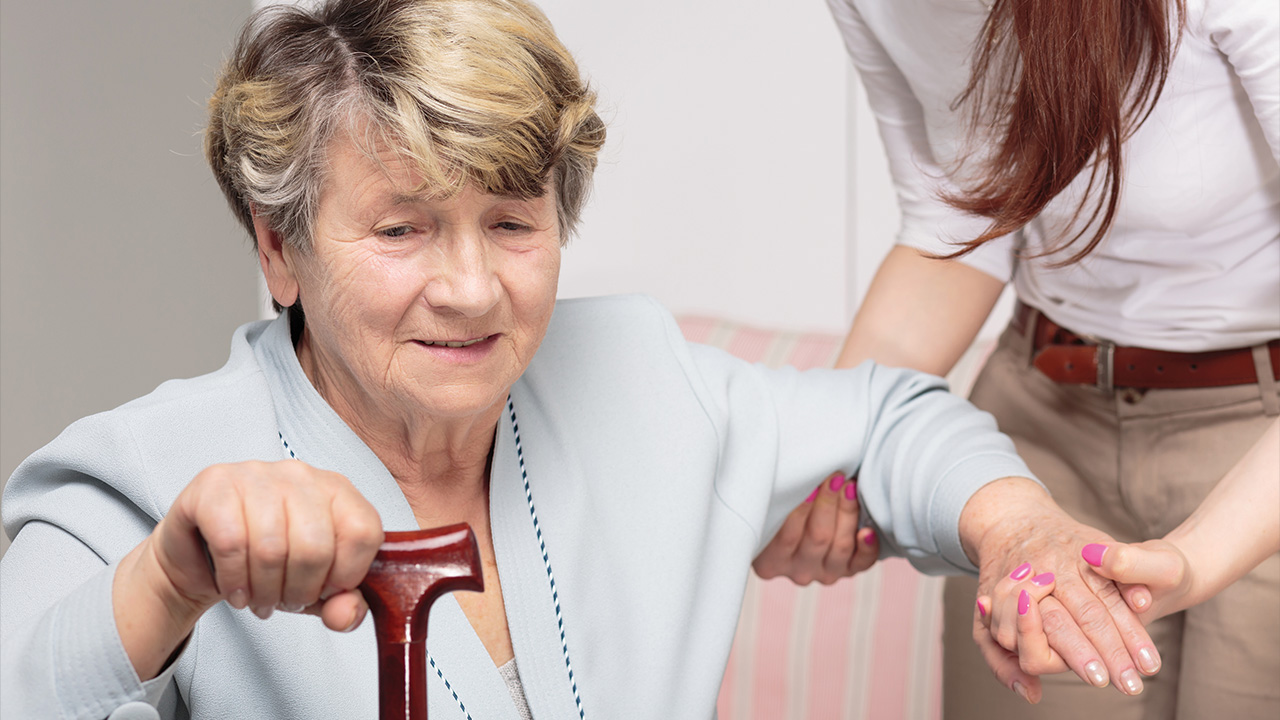

Protecting and ensuring the safety of elders is of prime importance for home caregivers. However, many don't stop to think about protecting themselves from injury. By protecting the caregivers, we also provide a safe and secure environment for such care. Preventing injuries, especially back and shoulder injuries (the most common), can be achieved through proper education and attention to body positioning when lifting, turning and transferring patients from one location to another.
To reduce the risk of back injuries as well as back pain in caregivers, proper lifting techniques and methods need to be learned. In addition to learning proper body placement when lifting or transferring a loved one, a caregiver also needs to assess certain risks, learn to control those risks, and to evaluate methods that help alleviate such risks altogether.
The spine provides the basic form of movement and support for the human body; therefore it is constantly used, and suffers cumulative injuries caused by repetitive lifting of heavy objects. Caregivers must often handle awkward situations in a home environment, including patients who are uncooperative, overweight, fearful, and even wet, all of which increase the risk of injury.
Preventing Caregiver Injuries: How to Lift Safely
The most important aspect of preventing shoulder, neck, and back injuries is a proper lifting technique. To reduce chances of injury, when transferring patients, caregivers should:
- Make sure that feet are stable, and as close as possible to the person being lifted.
- Face the person to be lifted, slightly bend the knees and squat in preparation to lift. Hold in the abdominals and keep the back straight. This will add lifting strength and encourage additional power from legs and arms.
- Maintain a position as close to the person as possible so that excess strain is not placed on the back by leaning over.
- When turning a loved one from back to side, distribute weight equally between feet and try to avoid extended forward bending movements as much as possible.
- Point feet toward the person being lifted. If possible, place one foot in between the person's feet and one foot to the outside for optimal stability.
- Attempt to lift using a smooth, flowing motion, pushing upward with leg muscles.
When possible, alleviate awkward body positions while bathing, dressing and lifting a loved one. Avoiding twisting, bending, and stooping positions will help to alleviate strain not only on the spine, but also on muscles and joints.
Common Injuries
Although the most common injuries suffered by caregivers in a home setting is back injuries, other dangers include exposure to needle sticks when caring for someone with diabetes or someone who needs supervised injections. In addition, exposure to contagious illnesses or diseases may also occur through contact with saliva, urine, feces and blood. Still, by far, the most prevalent injuries among caregivers are those that involve the back, neck and shoulder joints.
Diane Sewell, an Assistant Director of Nursing at a long-term care center with 30 years of geriatric care experience recommends, "If an elder is receiving physical therapy at a facility that is aware of a situation where a family member is going to be taking care of an elderly parent at home, they will often suggest that the caregiver join in a therapy session to learn how to correctly provide care for the person in different care scenarios."
Practicing Ergonomics in a Home Care Environment
Ergonomics is a relatively new term that helps to prevent injuries by identifying and alleviating risk factors that put strain on the body in a wide variety of occupations. Ergonomics is practiced not only in lifting, but in all aspects of home health care, including performing ordinary household tasks like laundry and cleaning, to helping a loved one bathe or dress.
Injuries can be alleviated by the use of:
- Grab bars and toilet seat risers in the bathroom
- Adjustable shower benches or chairs designed for bathtub use
- Adequate activity planning to reduce the number of transfers needed
- Proper training in positioning and ergonomic lifting procedures
Identifying risk factors for injury include:
- The effort that is required to move a person
- The posture of the person performing the task
- The position of the person's center of gravity in relation to the person transferring or lifting them
- The number of times a person must be moved, turned, or lifted on a daily basis
- The ability of the person to help with transfers
- The physical ability of the caregiver to facilitate such transfers
Safe lifting techniques should be learned in order to maintain the safety not only of the individual, but the caregiver. A caregiver who finds that the physical strain of providing care becomes too difficult may endanger safety for their loved one. Knowing when to ask for help and not being hesitant to doing so may prevent unfortunate accidents and injuries.
Whenever possible, assess daily needs to plan and avoid excess numbers of transfers, especially when a loved one is bedridden or suffers from various conditions that may make such transfers difficult. This is not to say that a loved one should remain in one location for as long as possible. Quality of life demands that a patient be able to engage in as many activities as he or she feels up to in order to maintain skills and therapies and activities that facilitate movement.
Why Caregivers Need to Practice Injury Prevention
Taking care of a loved one is not only emotionally demanding, but is physically demanding as well.
Says Sewell, "Non-professional caregivers are responsible for obtaining the education they need to properly care for loved ones at home. Many County Health Nursing Departments offer community-based resources that offer training on basic care giving skills for non-professionals. Another option is to call local hospitals for information, who might even suggest professional training through a Certified Nurse's Aide class." Ask professional CNAs (Certified Nursing Assistants) as well as nursing or physical therapy staff for tips on the best methods to help transfer or lift their loved ones when in a home environment.
Many caregivers taking care of parents or grandparents are simply not suited for such physical stress. Most caregivers in home environments are in their 50s, and 60s. With the physical demands of physically lifting, turning and transferring loved ones, injury is common. In fact, it is estimated that musculoskeletal injuries that occur as a result of lifting or moving patients affects nearly 52 percent of caregivers. The services of an occupational therapist may be used to recommend and train caregivers on the use of medical equipment and devices, such as a patient lift. If transferring becomes more challenging than a caregiver can handle, it may be a sign that it is time to consider senior housing with an increased level of supportive services.
The focus on home care is safety - both for the care receiver and the caregiver.